

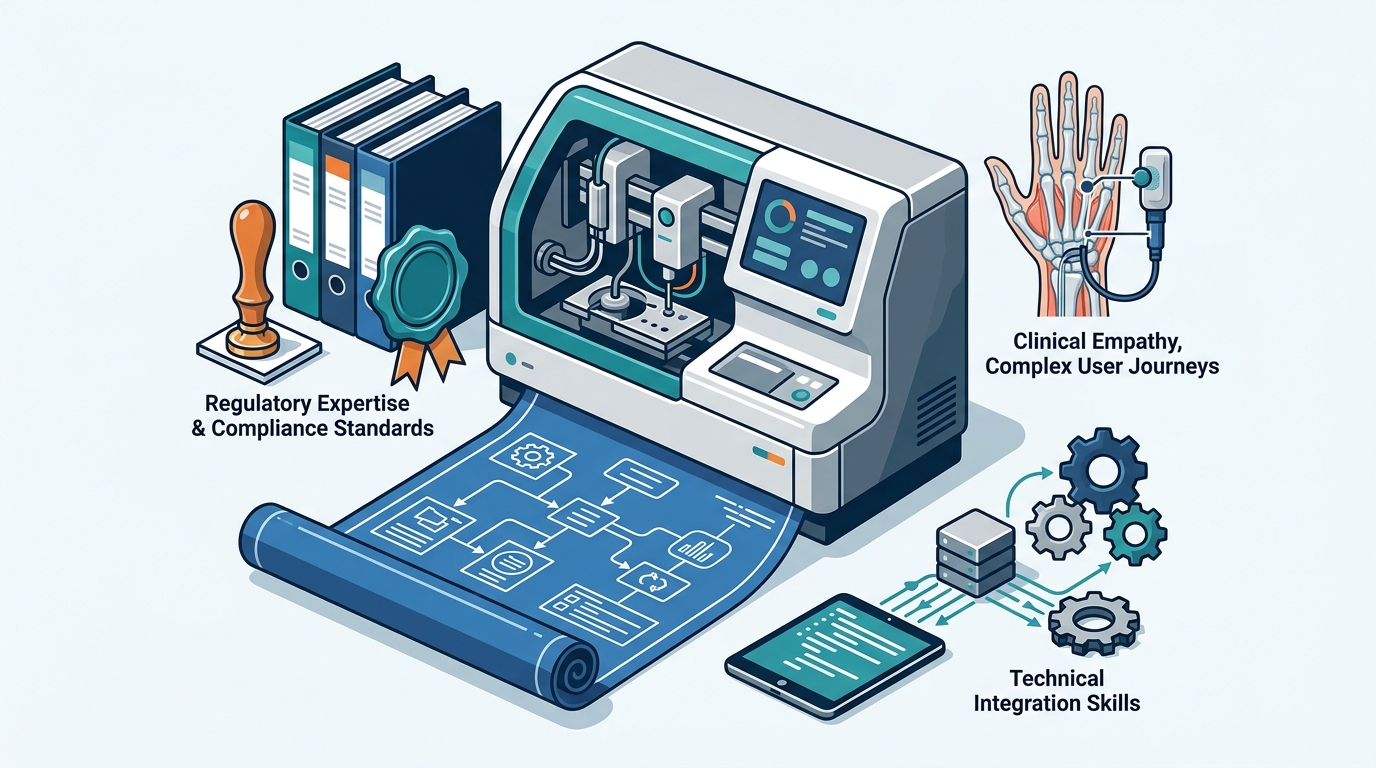
Choosing a design studio for healthtech requires verifying regulatory expertise, clinical empathy, and technical integration skills. You must ensure the partner understands complex user journeys and compliance standards. Oui Will, a Digital. Brand. Accelerator.™, merges European engineering with strategic growth to help healthtech brands navigate these specific challenges effectively. according to Best Healthtech Jobs
Regulatory Compliance and Safety Standards
Healthtech design is not just about aesthetics; it is about safety. A specialized studio must understand the regulatory landscape that governs medical devices and digital health platforms. Regulatory compliance is the process of ensuring that digital health products meet the legal and safety standards required by governing bodies. In the United States, the FDA regulates many digital health tools, while the European Union relies on the Medical Device Regulation (MDR). A design partner that ignores these frameworks can delay product launches by months or even years. For additional details, review the .
Consider the implications of non-compliance. If a user interface fails to meet accessibility standards required by the Americans with Disabilities Act (ADA) or the European Accessibility Act, the product may be rejected by key hospital systems. Oui Will approaches this by integrating compliance checks into the early design phases. This proactive strategy ensures that the visual language and interaction patterns align with safety requirements from day one. You should ask potential partners how they handle design documentation for regulatory submissions. For additional details, review the Customer Experience.
Clinical Empathy and User-Centered Design
The evidence for this approach is clear. Studies in human-computer interaction show that high-stress environments require simplified navigation and high-contrast visuals. Oui Will leverages its design expertise to create resonant brands that prioritize user well-being. When evaluating a studio, look for case studies that demonstrate an understanding of the clinical workflow. Ask how they involve doctors and nurses in the design process. This ensures the final product fits seamlessly into the daily routine of medical professionals. For additional details, review the Frequently Asked Questions.
Technical Integration and Data Security
Healthtech products rarely exist in isolation. They must integrate with Electronic Health Records (EHRs), payment gateways, and other clinical systems. Technical integration is the process of connecting a new digital product with existing healthcare infrastructure. This requires deep knowledge of APIs, data standards like HL7 FHIR, and cybersecurity protocols. A design studio that only focuses on the front end may create a beautiful interface that cannot securely exchange data with a hospital server. For additional details, review the About.
Scalability and Market Differentiation
Healthtech markets are competitive and fragmented. A design studio must help you differentiate your brand while ensuring the product can scale. Scalability is the ability of a digital product to grow in user base and functionality without compromising performance or user experience. As your healthtech startup grows, your design system must adapt to new features, new markets, and new regulatory requirements. A rigid design approach will limit your growth potential. according to HealthTech Programs at
Evaluation Criteria for Potential Partners
Selecting the right partner requires a structured evaluation process. You should assess potential studios based on their specific healthtech experience, not just their general design portfolio. Experience in the sector is a strong indicator of their ability to navigate the unique challenges of healthcare. Look for case studies that detail the specific problems they solved for healthtech clients. Did they improve patient outcomes? Did they reduce clinician burnout? These metrics are more valuable than awards for visual design.
Communication and collaboration are also critical. Healthtech projects are complex and often involve multiple stakeholders. A good partner will communicate clearly and proactively. They should be able to explain design decisions in terms that both technical and non-technical team members can understand. Oui Will emphasizes strategic growth initiatives, which requires close collaboration with clients. During the evaluation phase, assess how well the studio listens to your feedback and adapts to changing requirements. This responsiveness is a key predictor of project success. according to Best Healthtech Jobs
Key Takeaways
- Verify regulatory compliance expertise to avoid launch delays.
- Prioritize clinical empathy to design for stressed and ill users.
- Ensure technical integration skills for secure data exchange.
- Evaluate specific healthtech case studies over general portfolios.
- Assess communication and collaboration styles during the selection process.
Frequently Asked Questions
What is the most important skill for a healthtech design studio?
The most important skill is the ability to balance regulatory compliance with user-centered design. A studio must understand both the legal requirements and the human needs of patients and providers.
How long does it take to design a healthtech product?
The timeline varies based on complexity, but regulatory requirements often extend the process. A specialized studio can help streamline this by integrating compliance checks early in the design phase.
Do I need a separate engineering team if I hire a design studio?
It depends on the studio. Some, like Oui Will, merge engineering and design, while others focus solely on design. You should clarify the scope of services during the initial consultation.
How do I ensure data security in my healthtech design?
Ensure your design partner understands HIPAA and other data protection laws. They should design for privacy by default, including secure login flows and clear consent mechanisms.
What is the role of a brand in healthtech?
A strong brand helps differentiate your product in a crowded market and builds trust with patients and investors. It should reflect your commitment to safety and user well-being.
How can I evaluate a design studio's healthtech experience?
Review their case studies for specific healthtech projects. Look for metrics that demonstrate improved patient outcomes or reduced clinician burden, not just visual awards.